The full AI stack: from capex to consulting — GO Markets
Five companies · AI infrastructure play · 2026
The full AI stack: from capex to consulting
Infrastructure builders compared to the implementation bridge across the AI value chain

Note: Hyperscalers shown as 2026 CapEx spend. Accenture shown as cumulative advanced AI bookings ($11.5B through Q1 FY2026), reflecting its role as the adoption layer rather than the infrastructure layer.
Infrastructure (2026 CapEx projected)Implementation bridge (cumulative AI bookings)
Hyperscaler CapEx: Early 2026 analyst estimates, midpoint of ranges. Amazon approx. 100% YoY, Alphabet approx. 100%, Meta approx. 87%, Microsoft approx. 50%.
Accenture: Cumulative advanced AI bookings $11.5B through Q1 FY2026. Q1 AI bookings $2.2B (up 76% YoY), AI revenue $1.1B (up 120% YoY) across 1,300+ clients.
The information provided is of general nature only and does not take into account your personal objectives, financial situations or needs. Before acting on any information provided, you should consider whether the information is suitable for you and your personal circumstances and if necessary, seek appropriate professional advice. All opinions, conclusions, forecasts or recommendations are reasonably held at the time of compilation but are subject to change without notice. Past performance is not an indication of future performance. Go Markets Pty Ltd, ABN 85 081 864 039, AFSL 254963 is a CFD issuer, and trading carries significant risks and is not suitable for everyone. You do not own or have any interest in the rights to the underlying assets. You should consider the appropriateness by reviewing our TMD, FSG, PDS and other CFD legal documents to ensure you understand the risks before you invest in CFDs.

!
Important: Confirmed or estimated times, dates and figures should be checked against official investor relations calendars. Reporting schedules can change without notice.
$JPM| 2026 第 1 季財報發布期
摩根大通 (JPMorgan Chase & Co.)
NYSE | 金融服務 | 2026年4月14日
已確認
全球發布倒數 (美股開盤前)
00:00:00:00
每股盈餘 (EPS) 預期
US$5.42
營收預期
US$47.88bn
澳洲 / 亞洲4月14日 | 晚上 8:45
美國 / 拉美4月14日 | 早上 6:45
Market Intelligence: $JPM
Analysis: JPM price drivers and scenarios
NII guidance
~US$103bn
Full year | US$95bn ex:markets
ROTCE target
17%
Return on tangible common equity
Analyst range
US$5.02:5.70
Low to high estimate spread
AVG
LOW US$5.02AVG US$5.39HIGH US$5.70
The analyst spread of US$0.68 signals genuine disagreement about how the rate environment is flowing through to margins. A result that beats consensus but lands below the high:end estimate may produce a muted reaction. A print above US$5.70 changes the conversation.
Key swing factors for the result
Net interest income (NII)
The cleanest macro lever. Reflects the gap between lending rates and deposit costs.
Guidance: US$103bn full year
ROTCE: Scale check
Determines if JPM is converting scale into efficiency. 17% is the benchmark.
Target: 17% ROTCE
Trading and investment banking
Strong Q1 growth was expected in fees and markets revenue. These lines can offset softness in lending and a stronger than expected performance here can shift the narrative away from rate sensitivity entirely.
Watch: IB fees vs prior quarter
Expense discipline
A bank can beat the EPS estimate and still sell off if expense growth is running too hot. Pairing the EPS result with the expense trajectory gives a more complete read on whether the beat is durable.
Watch: Expense outlook commentary
Trade Execution: $JPM
Earnings reaction framework: Q1 2026
Bull case
EPS above US$5.70 | NII on track | ROTCE at or above 17%
Result clears the top of the analyst range. NII guidance holds or is revised up. IB fees and markets revenue show strong Q1 growth. Expense commentary is constructive.
Momentum and repositioning likely
Base case
EPS US$5.39:5.70 | NII in line | ROTCE near target
Result beats consensus but stays within the expected range. NII tracks guidance. Conference call tone matters more than the number. First move may fade if guidance is unchanged.
Muted or mixed initial reaction
Bear case
EPS below US$5.39 | NII misses | Expense growth surprises
Result falls at or below the consensus midpoint. NII guidance is cut or qualified. Expense growth comes in above the market expectation. IB or markets revenue disappoints.
Repricing of earnings multiple likely
Reaction trigger to watch: The market response in the first 30 minutes after the print may indicate which scenario traders are leaning towards. A move above the prior session high on volume may support the bull case. A fade back into the range after an initial pop may point to the base case. A break below the prior session low on volume suggests the bear case is gaining traction.
Sentiment Analysis · JPMorgan Chase
Interactive scenario analysis: $JPM
Select earnings outcome
Growth momentum
The AI offset: quality beat with NII and ROTCE confirmation
Stronger:than:expected demand for AI:related industrial lending effectively offsets the cooling mortgage market. Management maintains guidance as NII remains resilient in higher:for:longer conditions. IB fees and markets revenue add upside. ROTCE at or above 17% confirms the bank is converting scale into profit efficiently.
The consensus sits near the bottom of the analyst range. This positioning signals a potential beat-and-raise setup if backlog growth and F-35 delivery timelines confirm execution. A print near the high:end above US$7.10 could drive a multi:session continuation move.
Key swing factors for the result
Backlog visibility
Primary proof of demand. Book-to-bill above 1.2x validates full:year guidance and production ramp.
Backlog: US$194bn record
Free cash flow yield
Defence stocks rerate on cash conversion. Market wants confirmation of the US$6.5bn floor.
Guide: US$6.5bn to 6.8bn
Missile segment growth
PrSM and THAAD deliveries are in peak demand. Strong space margins can offset softness in aeronautics.
Watch: Fire control margins
Margin pressure
Pension charges and production inflation remain risks. A beat can be faded if operating margins contract.
Result clears the upper half of the analyst range. Management reaffirms or raises the full:year FCF outlook. Strong Missiles and Fire Control (MFC) margins offset any aeronautics supply chain lag.
Momentum and repositioning likely
Base case
EPS US$6.30:6.70 | Backlog steady at ~US$194bn
Result aligns with the US$6.38 consensus. F:35 delivery pace remains on track but offers no major upside surprise. Market waits for specific segment guidance on the conference call.
Result falls to the bottom of the analyst spread. Management cites further software delays or program losses. FCF trajectory is narrowed toward the lower end of previous expectations.
Repricing of earnings multiple likely
Reaction trigger to watch: The market response in the first 30 minutes after the print may indicate which scenario traders are leaning towards. A move above the prior session high on volume may support the bull case. A fade back into the range after an initial pop may point to the base case. A break below the prior session low on volume suggests the bear case is gaining traction.
Sentiment Analysis · Lockheed Martin
Interactive scenario analysis: $LMT
Select earnings outcome
Backlog confirmed
The defence premium: backlog and FCF confirmation drives continuation
EPS clears the top of the analyst range. Backlog holds at or above US$194bn and book:to:bill stays above 1.2, confirming that orders are replenishing faster than revenue is being recognised. FCF guidance holds within the US$6.5bn range.
The consensus sits near the bottom of the analyst range. This gives traders a quick visual for whether the print is merely in:line or actually strong enough to override the guidance discount that hit the stock after its last update. A result above US$7.20 changes the conversation entirely.
Key swing factors for the result
Book-to-bill ratio
Currently at 1.10, suggesting orders are still running ahead of revenue recognition. This is a critical signal for multi:year growth visibility in defense.
Watch: 1.10 target
Guidance reset risk
Management’s guidance came in below Street expectations previously. Traders will be highly sensitive to any further softening of the 2026 outlook.
Watch: Guidance commentary
Program concentration
B:21 Raider and Sentinel carry outsized execution sensitivity. Updates on production ramp and funding are the clearest sentiment drivers for the stock.
Watch: B:21 / Sentinel updates
Capacity investment
Lean into capex supports the industrial base long term but may pressure near:term margins. Check if investment is suppressing current earnings power.
Result crushes the US$6.03 consensus. Management confirms B:21 Raider production is ahead of schedule with improving margins. Sentinel program restructuring costs remain below baseline expectations. International awards drive the book:to:bill ratio above 1.15.
Momentum and sector rotation likely
Base case
EPS US$6.00:6.20 | Backlog stable at ~US$95.7bn
Result aligns with consensus. FCF targets for 2026 are reaffirmed but not expanded. Market focus shifts to "organic sales growth" metrics and segment operating margins. Initial reaction likely depends on the specific pacing of B:21 milestone payments.
Result falls at the low end of the analyst spread. Management flags higher infrastructure costs for Sentinel or delays in restricted Space segment awards. Margin pressure in Aeronautics persists, and the 2026 revenue guide is narrowed toward the US$43.5bn floor.
Sharp repricing of execution risk
Reaction trigger to watch: The market response in the first 30 minutes after the print may indicate which scenario traders are leaning towards. A move above the prior session high on volume may support the bull case. A fade back into the range after an initial pop may point to the base case. A break below the prior session low on volume suggests the bear case is gaining traction.
Sentiment Analysis · Northrop Grumman
Interactive scenario analysis: $NOC
Select earnings outcome
Stealth momentum
The stealth premium: B-21 acceleration drives rerating
EPS clears US$6.15. Management confirms production capacity agreement for the B:21 Raider. Sentinel ICBM restructuring hits Milestone B on schedule. Record backlog visibility and higher FCF guidance toward US$3.5bn trigger broad repositioning.
All earnings dates marked as confirmed or estimated should be verified against current company investor relations calendars before you act on them. Reporting schedules can change without notice due to corporate decisions, regulatory requirements or exchange timetable adjustments.
The mechanics: How the timing works across time zones
The US earnings season does not arrive as a smooth drip. It arrives in waves. For non-US traders, the primary challenge is the overnight gap: major results land while you are away from your desk and can move index CFDs before your local market opens. Before market open (BMO) and after market close (AMC) matter just as much as the numbers themselves. The timing changes how quickly markets react, when liquidity is available and whether the first move has already happened before your session begins.
For this cycle, the market is no longer rewarding AI mentions alone. It is looking for return on investment (ROI) proof. The four thematic snapshots below help explain where attention is likely to sit as results come through. Each theme has its own section with company cards that can be updated each quarter.
T1
Theme 1 — Institutional anchors
Defence against volatility
These companies are often watched as relative defensives during energy shocks and inflation spikes, although they remain exposed to normal share-price risk. When macro uncertainty rises, money has historically rotated toward businesses with contracted revenue, government-linked demand or pricing power that is not dependent on the consumer cycle — but past rotation patterns do not guarantee future performance.
JPM
JPMorgan Chase
Tuesday, 14 AprilConfirmed
Watch For
Net interest margin (NIM) under higher for longer rates, and whether AI spending remains cost neutral.
LMT
Lockheed Martin
Wednesday, 22 AprilEstimated
Watch For
F-35 delivery schedules and the company's ability to absorb tariff related costs on supply chain inputs.
NOC
Northrop Grumman
Monday, 27 AprilConfirmed
Watch For
B-21 Raider production progress and the conversion of its reported US$95.7 billion backlog into recognised revenue.
T2
Theme 2 — Tangible capital
EVs and energy
As parts of tech slow, investors have been rotating toward tangible, capital-intensive businesses. The energy transition and the infrastructure required to support AI data centre power demand have put utilities and energy companies in an unusual position: they are now growth stocks with defensive characteristics — though all remain subject to ordinary equity and sector risk.
TSLA
Tesla
Thursday, 23 AprilConfirmed
Watch For
The strategic shift from EV margins toward robotaxi and energy storage as the new growth narrative.
NEE
NextEra Energy
Friday, 24 AprilEstimated
Watch For
Data centre power demand and progress on its reported 30 GW contracted backlog as utilities face new infrastructure pressure.
XOM
Exxon Mobil
Wednesday, 29 AprilEstimated
Watch For
Permian and Guyana volume growth, and cash flow resilience during the Hormuz supply disruption.
T3
Theme 3 — The hardware invoice phase
AI infrastructure
This is the engine room of the S&P 500 and the part of the market most tied to whether AI capital expenditure is generating measurable returns. The question the market is now asking is not whether these companies are spending on AI. It is whether the spending is translating into capacity utilisation and revenue that justifies the multiple.
MSFT / GOOGL
Microsoft and Alphabet
Monday, 27 AprilEstimated
Watch For
Azure and Cloud capacity constraints against heavy AI capital expenditure. The gap between spending and utilisation is the market's primary concern.
NVDA
NVIDIA
Wednesday, 27 MayEstimated
Watch For
Blackwell GPU demand and gross margin sustainability as the product cycle matures and competition intensifies.
T4
Theme 4 — K-shaped recovery
Consumer platforms and devices
This theme tests the K-shaped consumer recovery: higher-income cohorts remain more resilient while lower-income cohorts face continued pressure from elevated borrowing costs and energy prices. Ad revenue and device upgrade cycles are the clearest indicators of where on the K-curve the consumer sits.
META / AMZN
Meta and Amazon
28 to 29 AprilEstimated
Watch For
AI-driven ad click improvements against Reality Labs spending and retail logistics costs as the profitability test for non-core investment.
AAPL
Apple
Thursday, 30 AprilEstimated
Watch For
iPhone upgrade cycle momentum and the Apple Intelligence rollout in China as the first real-world test of AI-driven hardware demand.
Analysis checklist: how to read each result
Use this structure for every company on your watchlist. A headline beat is common. The bigger market move often comes from how the market translates the details sitting behind the number.
1
Projected consensus
This is the bar for earnings per share (EPS) and revenue. Small beats may already be priced in. The market often sets a whisper number above the published consensus, so a technically positive result can still disappoint.
2
The call focus
Identify the single variable analysts are most focused on this cycle: capital expenditure versus margins, inventory turnover, customer growth rate, or contract backlog conversion.
3
The translation
A beat, meet or miss each carries a different market dynamic.
Beat
Matters most when forward guidance is credible. Without it, the initial move may reverse.
Meet
Often shifts focus to the tone of the call, particularly language around capacity or outlook.
Miss
Can be treated as the start of a trend and trigger a sharp repricing of valuation multiples.
The recency bias problem
The emotional trap many traders fall into is recency bias. Because the Magnificent 7 have led markets for so long, it can feel as though they are still the only trade that matters. That assumption deserves to be tested.
Three time horizons, three distinct signals. Update these each cycle with the most relevant near-term catalyst, the sector rotation to watch, and the longer-horizon dispersion theme.
Next Two Weeks
Consumer health barometer
Watch the 31 March Nike report as a lead indicator for consumer discretionary health. Footwear and apparel demand signals tend to front-run broader retail sentiment.
Next 30 Days
Bank lending and industrial demand
Focus shifts to the major banks. If loan demand tied to industrial and infrastructure projects remains firm, the earnings cycle may have support beyond the tech sector.
Next 60 Days
Wider dispersion between winners and losers
Watch for dispersion to widen. The companies converting heavy capital expenditure into measurable revenue outcomes may separate clearly from those that cannot.
Client & Education Portal
Follow the US Reporting Season
Stay ahead of major beats, misses, and market surprises. Log in to your terminal, open a new account, or explore our dedicated earnings academy.
The first major bank to report. Management commentary on credit conditions, consumer spending, and the macro outlook will set the tone for financial sector earnings and broader market sentiment.
◆
15 April - Bank of America Q1 earnings
A read on consumer credit conditions and household financial health, particularly relevant given rising energy costs and the 4.4% unemployment rate.
◆
28-29 April - FOMC meeting and policy statement
The month's most consequential event. The statement and any updated forward guidance may effectively confirm whether rate cuts remain a possibility for 2026.
◆
Ongoing - Strait of Hormuz tanker traffic
A live indicator of energy supply risk. Any escalation or resolution carries immediate implications for oil prices, inflation expectations, and the Fed's options.
◆
Ongoing - Sovereign AI export restrictions
Developing policy around technology export curbs may affect capital expenditure plans for US technology firms, with knock-on implications for growth and employment in the sector.
The Bigger Picture
Geopolitical volatility has forced a rotation into energy and defence at the expense of growth oriented technology positions. The estimated US$650 billion AI infrastructure buildout is increasingly being scrutinised for returns on investment. If earnings season disappoints on that front, and if the FOMC signals a prolonged hold, the combination could test risk appetite heading into May.
As tariff shocks collide with a ten year extreme in oil positioning, the margin for error is zero. See the technical markers and safe haven pivots defining the current risk environment.
135M idle barrels — days of cover against each demand benchmark
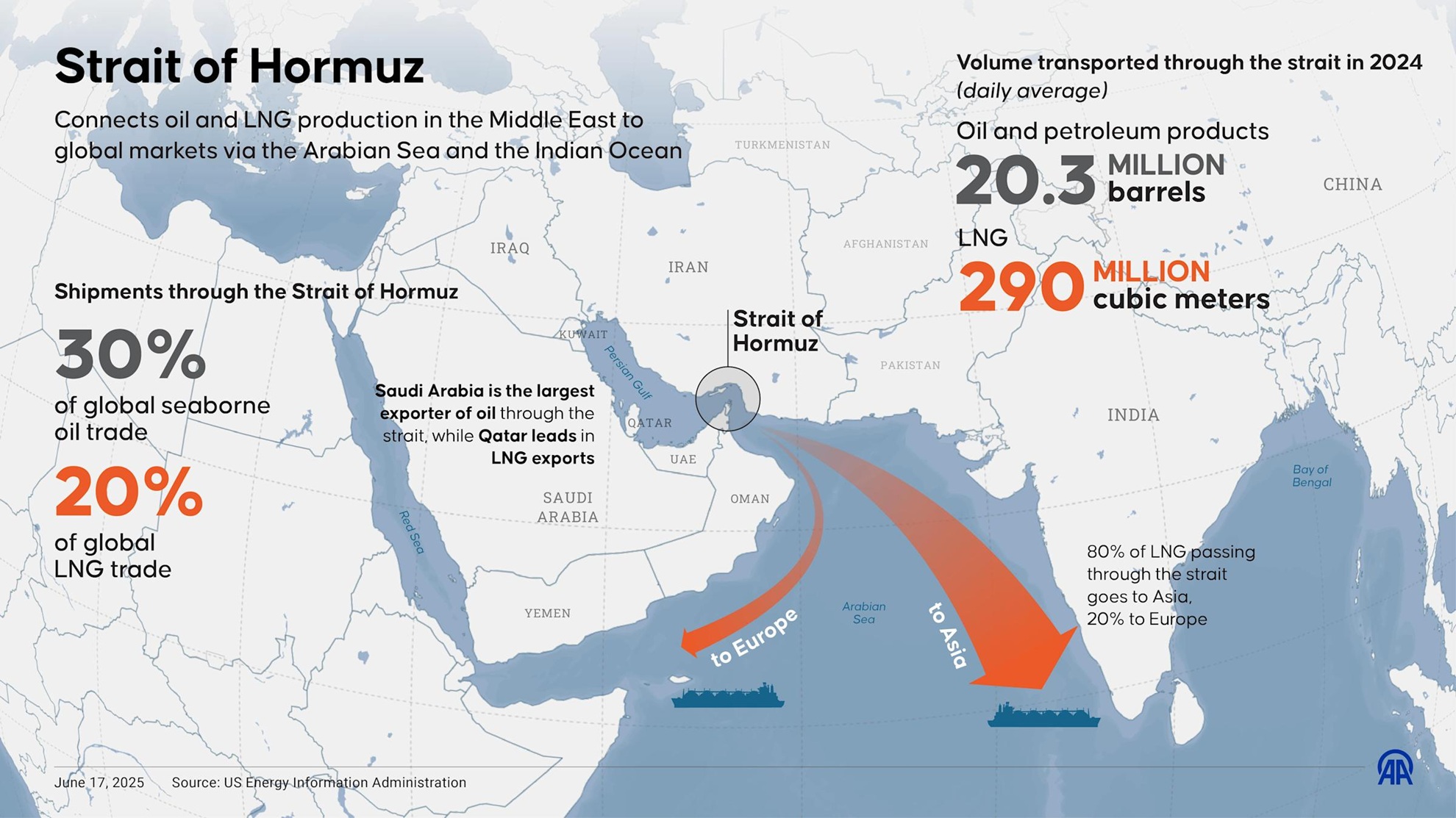
vs. Strait of Hormuz daily flow (20M bbl/day)
6.75 daysof Hormuz throughput covered
6.75 days
0
5
10
15
20
25
30 days
vs. Global oil consumption (104M bbl/day)
1.3 daysof world demand covered
1.3 days
0
5
10
15
20
25
30 days
vs. US Strategic Petroleum Reserve release (1M bbl/day)
135 daysof full SPR release pace covered
135 days — but SPR exists to replace this role
0
5
10
15
20
25
30 days
135M
idle barrels on tankers (midpoint of 120–150M range)
~33%
of daily Hormuz flow that is idle storage, not transit
<31 hrs
is all idle storage against global daily consumption
Indicative market trajectories based on disruption severity
Scenarios for the weeks ahead
1–2 WEEKS
Ceasefire catch-up
Markets face catch-up repricing. Brent could consolidate in the US$105–US$115 range as risk premia unwind. Brent may trade lower (US$95–US$110) if strategic stocks bridge the temporary shortfall.
2–4 WEEKS
Infrastructure blitz
Shifts to structural supply shock. Brent moving toward US$150–US$200 cannot be ruled out. This is the stagflation trigger where energy costs constrain central bank flexibility.
STRUCTURAL
Geopolitical floor
Iran's transit fee demand creates a permanent input cost. The pre-crisis price structure (US$60–US$70) may not return, embedded in insurance and freight rates.
Critical Threshold
US$120 remains the level at which energy inflation becomes a direct Federal Reserve policy problem.
Developing situation
|
Strait of Hormuz | Section 122 Tariffs
PublishedApril 2026
Brent CrudeAbove US$100
VIX31
In focus6 markets
Oil PositioningDecade-low longs
The Framework & MechanismIs the market the red line?
+
This is where the TACO idea starts to matter. Traders are not just watching the rhetoric. They are watching when it starts to hit markets, inflation and the wider economy.
Oil is at the centre of that risk. If disruption around the Strait of Hormuz starts to threaten global energy flows, the story quickly becomes macro. Higher oil can lift inflation expectations, pressure central banks and tighten financial conditions.
That is why a pause can look less like diplomacy and more like pressure relief. The real red line may be the point where the economic damage becomes too obvious to ignore.
Short Squeezed
Positioning adds another layer. Oil still looks under-owned, with futures positioning near decade-long bearish extremes. If a fresh shock lands, short-covering could drive prices higher much faster than fundamentals alone would suggest.
That is the short-squeeze risk. In the Commitment of Traders (COT) report, recent data suggests oil long exposure is relatively low by historical standards.
Humanitarian Reality
Whatever may be promised in political messaging, any sustained conflict in Iran would carry a heavy cost in displacement, infrastructure damage and wider regional stress. A relief rally in markets does not change that.
Global Isolation
Even if pauses are used to steady domestic market sentiment, allies and multilateral institutions may view bluff-and-retreat tactics as a credibility problem that creates longer-term diplomatic friction.
Positioning gap indicator
Divergence analysis between positioning and risk environment
APRIL 2026
Bars show GO Markets’ internal estimate of the divergence between current futures positioning and levels seen in comparable historical shock environments.
Brent crudeExtreme
Gold (XAU/USD)Very high
Nasdaq 100High
USD/CNHHigh
US 10 yr yieldMedium
USD/CADMedium
Extreme decade scale positioning extreme
High significant divergence
Medium moderate divergence
Methodology note
The Positioning Gap Indicator is based on GO Markets’ internal analysis and is intended as a high-level, illustrative framework only. It uses a combination of market positioning data, historical comparisons and discretionary assumptions about how similar energy and trade shocks have affected markets in the past. The ‘Extreme’, ‘Very High’, ‘High’ and ‘Medium’ labels are relative internal classifications, not objective market standards, and should not be relied on as predictions, forecasts or a guarantee of future outcomes.
The Six Markets
The six markets that matter most
Each of these six markets is exposed to the current situation through a different mechanism. Understanding the mechanism, not just the price, matters. It helps explain whether a move is a headline reaction or the start of something broader. Tap any card to expand the full analysis.
01
BRENT
Brent crude oil
ENERGYDIRECT CHANNELSQUEEZE RISK: EXTREME
+
The Clear Transmission Channel
Brent is the international benchmark for crude and the most direct transmission mechanism in this geopolitical thesis. Any disruption to physical flows, particularly through the Strait of Hormuz, forces an immediate tightening of global energy supply.
The Positioning Backdrop
Futures positioning currently sits at a ten year bearish extreme. Leveraged funds have cut long exposure heavily. In the event of a physical supply shock, this imbalance creates the potential for a violent short covering squeeze.
● Bull Case
Hormuz disruption extends beyond four weeks. Extended disruption could lift Brent sharply if supply flows are impaired for longer.
● Bear Case
Diplomatic intervention reopens the strait quickly. Strategic petroleum reserve (SPR) releases and increased spare capacity cap any price rally.
Strategic Marker
US$120: the point at which energy inflation becomes a direct Federal Reserve policy problem, rather than just a market narrative.
02
XAU/USD
Gold
SAFE HAVENUNDER-OWNEDSQUEEZE RISK: VERY HIGH
+
The Counter-Intuitive Setup
Despite a clear geopolitical risk profile, leveraged funds have been reducing bullish gold exposure. This leaves the market under-owned at the exact moment the fundamental case for safe haven assets is strengthening.
The Inflation Variable
The critical factor for Gold is whether energy-driven inflation limits the Fed's room to maneuver. If policy flexibility weakens, Gold could catch up quickly as a hedge against stagflation.
● Bull Case
Real yields fall as energy inflation outpaces rate hikes. Under-owned positioning amplifies the catch up move as institutional funds rebuild exposure.
● Bear Case
Geopolitical tensions ease rapidly. The Fed remains credibly focused on inflation, keeping real yields positive and supporting the USD over Gold.
Strategic Marker
One level to monitor is prior resistance, alongside any change in COT positioning.
03
US100/NAS100
Nasdaq 100
TECHNOLOGYDUAL PRESSURERATE AND SUPPLY RISK
+
Why it is a complicated position
The Nasdaq faces immediate pressure from two fronts: Stickier energy-driven inflation forces rates higher for longer, compressing multiples, while trade tensions unsettle the supply chains beneath major tech names.
Why the 10 year yield matters here
When the 10 year Treasury yield holds above 4.5%, the future value of technology earnings must be discounted at a higher rate. AI linked earnings momentum must overpower this valuation headwind.
● Bull Case
Earnings season delivers proof of AI investment generating real revenue. Index components successfully insulate supply chains, and AI capex momentum overrides the macro headwind.
● Bear Case
Energy inflation keeps yields above 4.5%. Multiple compression in high valuation names triggers a broader index decline amid disappointments in AI monetization.
Strategic Marker
S&P 500 at 6,498: a widely watched Fibonacci cluster. A sustained move below this threshold highlights a historically challenging framework for growth equities.
04
USD/CNH
US dollar/offshore Chinese yuan
FXBEIJING READPOLICY PROXY
+
What it tells you
USD/CNH is the cleanest real time read on how Beijing is responding to tariff pressure. A sharp rise suggests China is allowing currency weakness to absorb the costs of trade friction.
Why it matters beyond China
A move in USD/CNH doesn't stay contained. It spills into Asian equities, commodity demand, and broader risk appetite. Deliberate depreciation signals a shift in the global trade environment.
● USD Bull / Yuan Bear
Beijing allows yuan weakness as a deliberate countermeasure. Capital outflows accelerate, and USD safe haven demand reinforces the move.
● Yuan Recovery
Trade negotiations begin and a face saving off ramp is found. PBOC intervention defends the yuan, and the dollar's safe haven premium fades.
Strategic Marker
7.30 on USD/CNH: a sustained move above this has historically been associated with broader risk off moves in Asian markets.
05
US10Y/TNOTE
US 10 year Treasury yield
RATESMACRO PLUMBINGSHAPES EVERYTHING ELSE
+
Why it sits under everything
The 10 year yield shapes mortgage costs, corporate borrowing, and the valuation framework for risk assets globally. When it rises, borrowing becomes more expensive across the entire system.
The Independent Movement Risk
If oil forces the Fed to delay cuts, the 10 year yield could rise regardless of Fed communication. It can tighten financial conditions even before a formal policy shift occurs.
● Rates Fall Case
Oil shock proves transient. Fed maintains guidance and 10 year yields pull back toward 4.0%, relieving pressure on equities and providing support for bonds.
● Rates Rise Case
Sustained oil above US$100 pushes inflation higher. Fed pauses rate cut language and the 10 year yield breaks above 4.5%, compressing equity multiples.
Strategic Marker
4.5% on the 10 year yield: a sustained break above this while oil remains above US$100 is a historically challenging combination for equities.
06
USD/CAD
US dollar/offshore Canadian dollar
FXOIL-LINKEDLEAD INDICATOR
+
The Double Exposure
USD/CAD is a lead indicator because Canada sits at the intersection of energy and trade. It benefits from higher oil revenue but is highly sensitive to US economic and trade conditions.
When the Forces Collide
When oil rises, the CAD often strengthens; when trade stress rises, it weakens. In the current environment, these forces are colliding rather than canceling each other out.
● CAD Strengthens
Oil sustained above US$100 boosts export revenue while trade tensions stay short of Canada specific tariffs. Bank of Canada holds rates steady.
● CAD Weakens
Safe haven USD demand outweighs the oil benefit. Bank of Canada cuts rates to offset trade headwinds.
Strategic Marker
1.42 on USD/CAD: a sustained move above this signals trade anxiety is dominating the oil benefit, often preceding broader risk off moves.
What could go wrong
Four reasons the market logic could fail
+
A coherent macro case is still only a case. Markets regularly ignore tidy narratives for longer than expected, or invalidate them quickly. Four failure paths stand out.
1
The situation de-escalates faster than the news cycle suggests
Geopolitical risk premia can build slowly and disappear quickly. Any credible sign of de-escalation, especially around shipping lanes or energy infrastructure, could reverse oil sharply and drain urgency from the rest of the thesis. This is precisely the scenario the TACO framework predicts.
2
Tariff posturing does not become tariff policy
The market may be reacting to opening positions rather than settled policy. If Washington and Beijing find a face-saving off-ramp, as they have in previous trade disputes, currency and equity moves that anticipated escalation could unwind just as fast as they built.
3
AI investment spending overrides the macro headwind
Technology capital expenditure has remained more resilient than expected for much of the past two years. If earnings season shows that AI infrastructure spending is still translating into real demand and returns, the growth narrative may reassert itself, particularly in the Nasdaq 100.
4
The squeeze never arrives: extended positioning holds for longer than expected
Stretched positioning does not automatically produce a violent reprice. Markets can stay under-owned for months if risk appetite remains weak and institutions are unwilling to rebuild exposure. The set-up can exist without the catalyst arriving in a way that forces the move.
Forward Calendar
What to watch and when
+
Three time horizons matter here. The first tests supply resilience. The second tests financial system health. The third tests whether any shift in market leadership is cyclical or structural.
Three horizon watchlist
Signals and catalysts across the next two months
Next Two Weeks
Chipmaker guidance and supply commentary
Major semiconductor earnings calls will offer an early read on whether supply bottlenecks are worsening and whether management teams are changing production assumptions. If supply commentary deteriorates, the inflation story gets another push and the case for higher for longer rates strengthens.
Next 30 Days
Bank earnings and loan demand
Major US banks will provide a useful check on whether capital spending related to AI infrastructure is still being financed. The most important signal may not be earnings per share. It may be commercial loan demand. If businesses are pulling back on borrowing, the growth cycle may be softening earlier than the market expects.
Next 60 Days
Enablers versus spenders
The more structural test is whether the market begins rewarding businesses that produce physical outputs: energy producers, hardware makers and defence contractors, while penalising software companies that still cannot prove a clear return on AI spending. A wider performance gap between those groups would suggest something deeper than a temporary rotation.
!
Important: Confirmed or estimated times, dates and figures should be checked against official investor relations calendars. Reporting schedules can change without notice.
$JPM| 2026 第 1 季財報發布期
摩根大通 (JPMorgan Chase & Co.)
NYSE | 金融服務 | 2026年4月14日
已確認
全球發布倒數 (美股開盤前)
00:00:00:00
每股盈餘 (EPS) 預期
US$5.42
營收預期
US$47.88bn
澳洲 / 亞洲4月14日 | 晚上 8:45
美國 / 拉美4月14日 | 早上 6:45
Market Intelligence: $JPM
Analysis: JPM price drivers and scenarios
NII guidance
~US$103bn
Full year | US$95bn ex:markets
ROTCE target
17%
Return on tangible common equity
Analyst range
US$5.02:5.70
Low to high estimate spread
AVG
LOW US$5.02AVG US$5.39HIGH US$5.70
The analyst spread of US$0.68 signals genuine disagreement about how the rate environment is flowing through to margins. A result that beats consensus but lands below the high:end estimate may produce a muted reaction. A print above US$5.70 changes the conversation.
Key swing factors for the result
Net interest income (NII)
The cleanest macro lever. Reflects the gap between lending rates and deposit costs.
Guidance: US$103bn full year
ROTCE: Scale check
Determines if JPM is converting scale into efficiency. 17% is the benchmark.
Target: 17% ROTCE
Trading and investment banking
Strong Q1 growth was expected in fees and markets revenue. These lines can offset softness in lending and a stronger than expected performance here can shift the narrative away from rate sensitivity entirely.
Watch: IB fees vs prior quarter
Expense discipline
A bank can beat the EPS estimate and still sell off if expense growth is running too hot. Pairing the EPS result with the expense trajectory gives a more complete read on whether the beat is durable.
Watch: Expense outlook commentary
Trade Execution: $JPM
Earnings reaction framework: Q1 2026
Bull case
EPS above US$5.70 | NII on track | ROTCE at or above 17%
Result clears the top of the analyst range. NII guidance holds or is revised up. IB fees and markets revenue show strong Q1 growth. Expense commentary is constructive.
Momentum and repositioning likely
Base case
EPS US$5.39:5.70 | NII in line | ROTCE near target
Result beats consensus but stays within the expected range. NII tracks guidance. Conference call tone matters more than the number. First move may fade if guidance is unchanged.
Muted or mixed initial reaction
Bear case
EPS below US$5.39 | NII misses | Expense growth surprises
Result falls at or below the consensus midpoint. NII guidance is cut or qualified. Expense growth comes in above the market expectation. IB or markets revenue disappoints.
Repricing of earnings multiple likely
Reaction trigger to watch: The market response in the first 30 minutes after the print may indicate which scenario traders are leaning towards. A move above the prior session high on volume may support the bull case. A fade back into the range after an initial pop may point to the base case. A break below the prior session low on volume suggests the bear case is gaining traction.
Sentiment Analysis · JPMorgan Chase
Interactive scenario analysis: $JPM
Select earnings outcome
Growth momentum
The AI offset: quality beat with NII and ROTCE confirmation
Stronger:than:expected demand for AI:related industrial lending effectively offsets the cooling mortgage market. Management maintains guidance as NII remains resilient in higher:for:longer conditions. IB fees and markets revenue add upside. ROTCE at or above 17% confirms the bank is converting scale into profit efficiently.
The consensus sits near the bottom of the analyst range. This positioning signals a potential beat-and-raise setup if backlog growth and F-35 delivery timelines confirm execution. A print near the high:end above US$7.10 could drive a multi:session continuation move.
Key swing factors for the result
Backlog visibility
Primary proof of demand. Book-to-bill above 1.2x validates full:year guidance and production ramp.
Backlog: US$194bn record
Free cash flow yield
Defence stocks rerate on cash conversion. Market wants confirmation of the US$6.5bn floor.
Guide: US$6.5bn to 6.8bn
Missile segment growth
PrSM and THAAD deliveries are in peak demand. Strong space margins can offset softness in aeronautics.
Watch: Fire control margins
Margin pressure
Pension charges and production inflation remain risks. A beat can be faded if operating margins contract.
Result clears the upper half of the analyst range. Management reaffirms or raises the full:year FCF outlook. Strong Missiles and Fire Control (MFC) margins offset any aeronautics supply chain lag.
Momentum and repositioning likely
Base case
EPS US$6.30:6.70 | Backlog steady at ~US$194bn
Result aligns with the US$6.38 consensus. F:35 delivery pace remains on track but offers no major upside surprise. Market waits for specific segment guidance on the conference call.
Result falls to the bottom of the analyst spread. Management cites further software delays or program losses. FCF trajectory is narrowed toward the lower end of previous expectations.
Repricing of earnings multiple likely
Reaction trigger to watch: The market response in the first 30 minutes after the print may indicate which scenario traders are leaning towards. A move above the prior session high on volume may support the bull case. A fade back into the range after an initial pop may point to the base case. A break below the prior session low on volume suggests the bear case is gaining traction.
Sentiment Analysis · Lockheed Martin
Interactive scenario analysis: $LMT
Select earnings outcome
Backlog confirmed
The defence premium: backlog and FCF confirmation drives continuation
EPS clears the top of the analyst range. Backlog holds at or above US$194bn and book:to:bill stays above 1.2, confirming that orders are replenishing faster than revenue is being recognised. FCF guidance holds within the US$6.5bn range.
The consensus sits near the bottom of the analyst range. This gives traders a quick visual for whether the print is merely in:line or actually strong enough to override the guidance discount that hit the stock after its last update. A result above US$7.20 changes the conversation entirely.
Key swing factors for the result
Book-to-bill ratio
Currently at 1.10, suggesting orders are still running ahead of revenue recognition. This is a critical signal for multi:year growth visibility in defense.
Watch: 1.10 target
Guidance reset risk
Management’s guidance came in below Street expectations previously. Traders will be highly sensitive to any further softening of the 2026 outlook.
Watch: Guidance commentary
Program concentration
B:21 Raider and Sentinel carry outsized execution sensitivity. Updates on production ramp and funding are the clearest sentiment drivers for the stock.
Watch: B:21 / Sentinel updates
Capacity investment
Lean into capex supports the industrial base long term but may pressure near:term margins. Check if investment is suppressing current earnings power.
Result crushes the US$6.03 consensus. Management confirms B:21 Raider production is ahead of schedule with improving margins. Sentinel program restructuring costs remain below baseline expectations. International awards drive the book:to:bill ratio above 1.15.
Momentum and sector rotation likely
Base case
EPS US$6.00:6.20 | Backlog stable at ~US$95.7bn
Result aligns with consensus. FCF targets for 2026 are reaffirmed but not expanded. Market focus shifts to "organic sales growth" metrics and segment operating margins. Initial reaction likely depends on the specific pacing of B:21 milestone payments.
Result falls at the low end of the analyst spread. Management flags higher infrastructure costs for Sentinel or delays in restricted Space segment awards. Margin pressure in Aeronautics persists, and the 2026 revenue guide is narrowed toward the US$43.5bn floor.
Sharp repricing of execution risk
Reaction trigger to watch: The market response in the first 30 minutes after the print may indicate which scenario traders are leaning towards. A move above the prior session high on volume may support the bull case. A fade back into the range after an initial pop may point to the base case. A break below the prior session low on volume suggests the bear case is gaining traction.
Sentiment Analysis · Northrop Grumman
Interactive scenario analysis: $NOC
Select earnings outcome
Stealth momentum
The stealth premium: B-21 acceleration drives rerating
EPS clears US$6.15. Management confirms production capacity agreement for the B:21 Raider. Sentinel ICBM restructuring hits Milestone B on schedule. Record backlog visibility and higher FCF guidance toward US$3.5bn trigger broad repositioning.